Welcome at the Institute of Electrical Engineering (ETI)
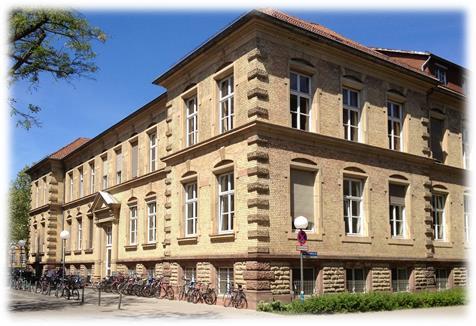
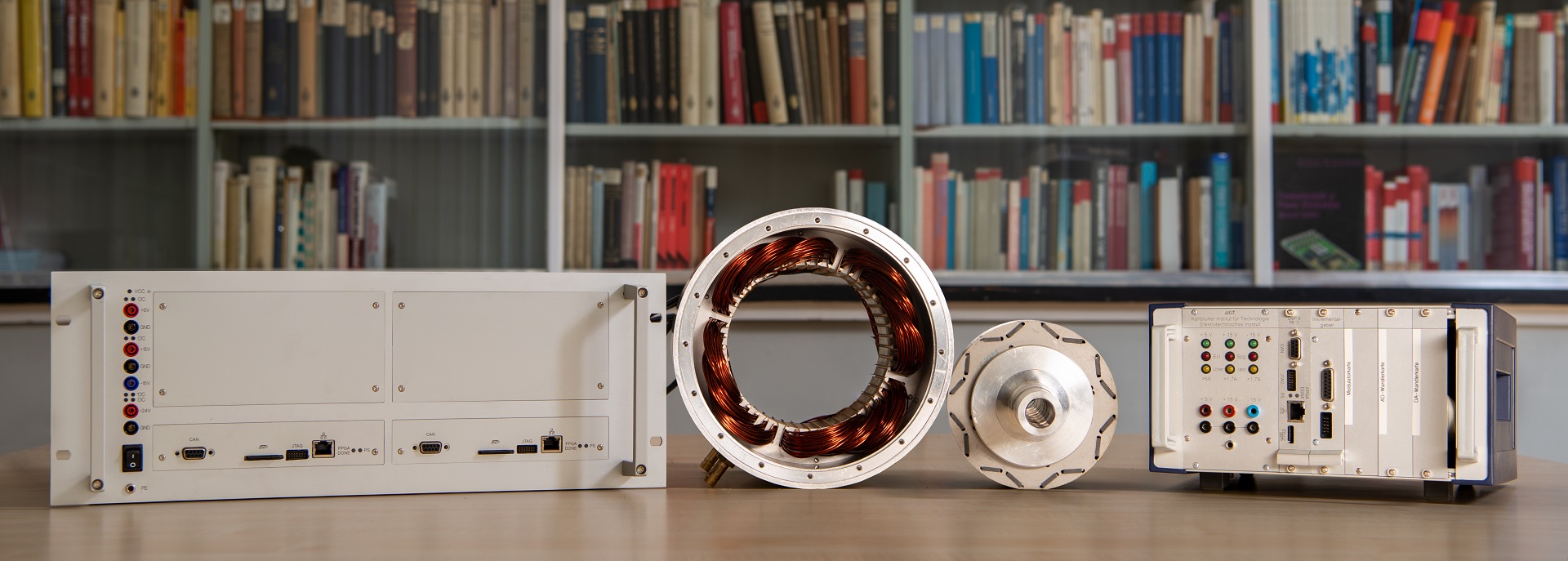
At the Institute of Electrical Engineering (ETI) of Karlsruhe Institute of Technology (KIT), experts in power electronics, electrical machines, drive control, and energy storage systems conduct research. With about 70 employees, interdisciplinary cooperation of these neighboring research areas takes place in order to improve the increasing requirements in terms of power density, functionality, and energy efficiency and to create innovations.
In addition to research and teaching, the ETI is working on a wide range of projects in close cooperation with industry and public project sponsors to find innovative solutions and concepts for the future. In addition, the ETI offers an extensive equipment pool in which prototypes are built and tested for use.
News | Archive
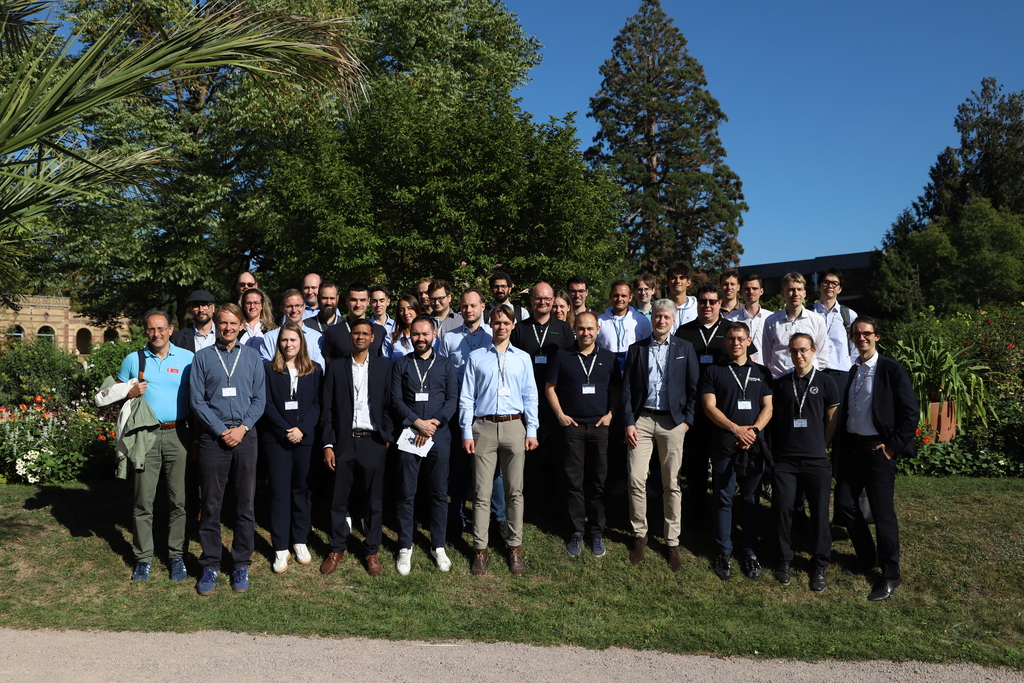
The Power Electronics Student Summit (PELSS2026) took place for the third time from September 22 to 23, 2026, in the Torbogensaal of the Botanical Garden. The conference provided an excellent platform for discussing current topics and innovations in power electronics. Students presented their research results through interactive poster sessions and presentations.
Best Paper Awards 2026Special mention goes to this year’s award winners, whose work was honored with a Best Paper Award:
„An Integrated Rotor Telemetry System Based on NFC Wireless Charging for Temperature Measurement in PMSMs“
Hannes Bischoff (RWTH Aachen)
„Phase Shift and Dead Time Optimization of a Dual Active Bridge with Single-Gate GaNMBDS for Bipolar Output Voltage“
Michael Giek (Universität Stuttgart)
„A Monolithic Bidirectional GaNAuxiliary Resonant Commutated Pole 800V SiCInverter“
Michael Majer (Universität Stuttgart)
Congratulations to all the winners!
Scientific Exchange with DFG GaNius
A particular highlight was the direct exchange with the researchers from the DFG GaNius project. The intensive academic discourse contributed significantly to the event’s success.
Support from Sponsors
PELSS2026 was made possible thanks to the support of sponsors Schaeffler, MR und Mitsubishi. A very special thank you for supporting the next generation of researchers in power electronics!

Dr.-Ing. Fabian Sommer was awarded the PI Innovation Award this year for his dissertation, “Modeling, Design and Operation of a High Power Dual Active Bridge with focus on Parasitic Effects”. The awards ceremony took place on 31 July 2026. "With the PI Innovation Award, we want to recognize research that combines scientific excellence with tangible benefit. This dissertation impressively demonstrates how innovative basic research can pave the way for more powerful and efficient energy systems. These findings make an important contribution to the energy supply of the future," said Dr. Michael Albiez, CEO of PI. The award was presented by Dr. Steffen Schreiber, Director Global Innovation and Scouting at PI, and Dr.-Ing. Markus Simon, Strategic Innovation Management at PI. Congratulations!
More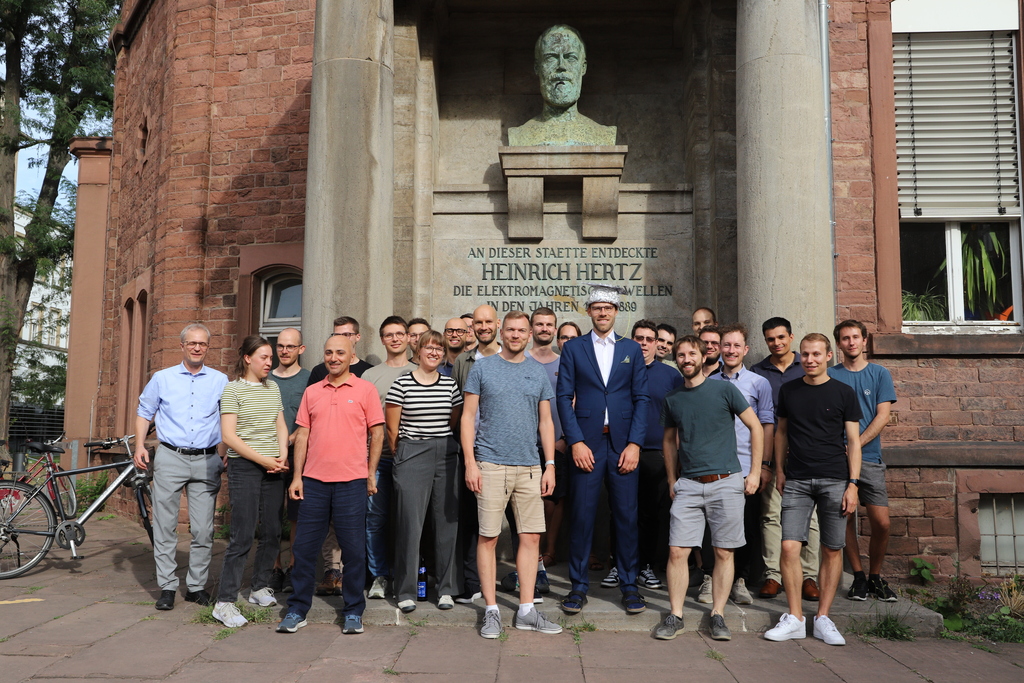
The ETI congratulates Mr. Menger on passing his doctoral examination. The title of his dissertation is "Modelling and Operation of a Multiport Solid State Transformer." The examination date was September 3, 2026.

The Electrical Engineering Institute (ETI) at KIT has installed an innovative photovoltaic system on its South Campus. The roof-integrated system, with a capacity of 113 kWp, generates approximately 109 MWh of electricity per year and covers about one-third of the institute’s energy needs. At the same time, it serves as a research platform for integrating photovoltaics, battery storage, and charging infrastructure for electric vehicles.
What makes this project unique is its implementation in compliance with historic preservation guidelines: The modules were installed partly as a flush-mounted in-roof system and partly as a rooftop system. A real-time dashboard in the entrance area displays current energy generation and consumption to raise awareness among students and visitors about sustainable energy solutions.
“This project demonstrates how historic buildings can be modernized while simultaneously generating scientific insights,” explains Prof. Marc Hiller, co-director of the ETI. The system reduces CO₂ emissions by 37.5 metric tons annually and underscores the ETI’s importance to the energy transition.